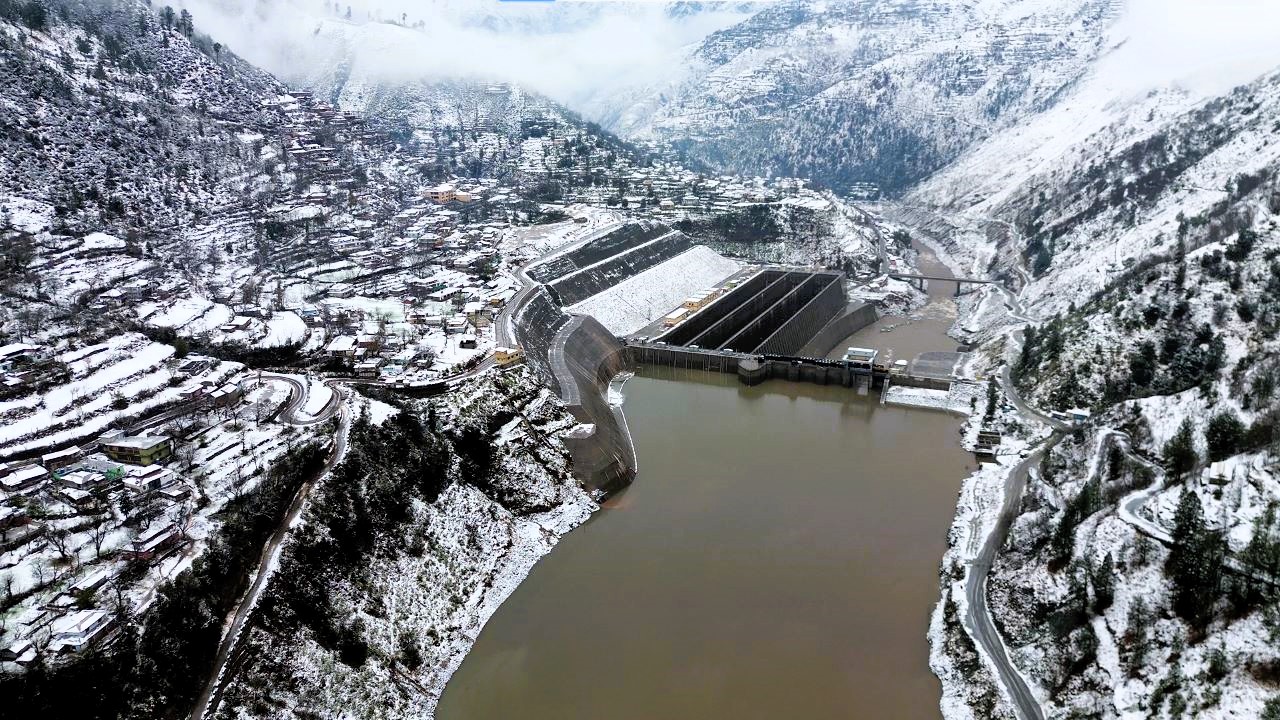
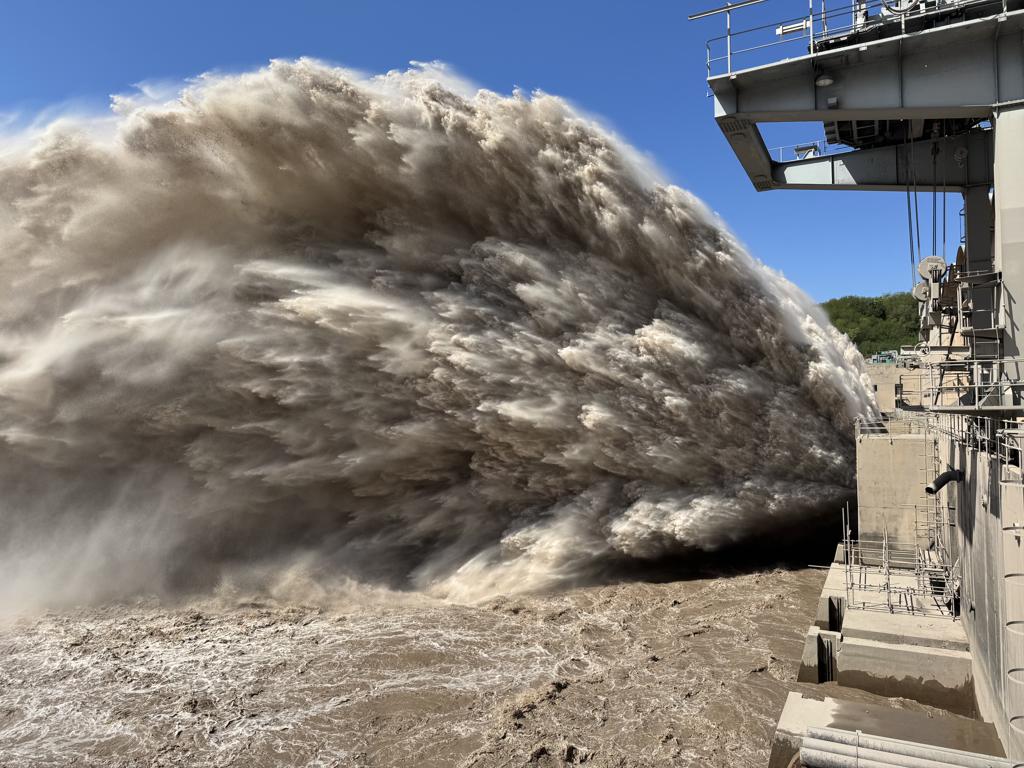
Nestled among rugged peaks, this hydropower facility transforms the natural flow of mountain water into dependable renewable energy.
Every surge through the spillway reflects precision engineering, environmental responsibility, and a commitment to sustainable progress—powering communities today while protecting the landscape for tomorrow.
The reservoir is currently exhibiting stable water levels and calm surface conditions, set within a mountainous catchment area that supports both water storage and natural scenery. Recent observations indicate clear water, steady inflow conditions, and no visible signs of distress along the reservoir margins.
Surrounding slopes remain intact, with exposed rock and vegetated areas providing natural bank protection. Seasonal snow cover is visible at higher elevations, contributing to sustained inflow and long-term water availability.
Key Highlights
Stable reservoir water level Calm surface conditions with uniform flow patterns Intact reservoir banks with no visible erosion concerns Snow-fed catchment supporting ongoing inflow
Operational Significance
The reservoir continues to serve its intended purpose of water storage and regulation, supporting downstream requirements while maintaining environmental balance within the valley. Ongoing monitoring ensures that water levels, inflows, and surrounding slopes remain within acceptable operating limits.
Ongoing Monitoring
Routine inspections and visual assessments are conducted to:
Track seasonal inflow variations Monitor reservoir rim and slope conditions Ensure safe and reliable operation of associated structures
The reservoir remains in satisfactory condition, continuing to function as a vital component of the overall water management system.
During a recent inspection, corrosion was observed emerging from beneath the Tainter gate sill, accompanied by active water leakage at the sill–gate interface. The leakage appears to be originating from the downstream side of the sill plate, where corrosion products are visibly present and being carried out by flowing water.
The presence of rust staining and material loss indicates ongoing corrosion of embedded steel components, likely exacerbated by prolonged exposure to moisture and limited drainage beneath the sill. This condition suggests that water is infiltrating through the sill assembly, potentially bypassing seals or moving through deteriorated grout or bedding material.
Key Observations
Visible corrosion products discharging from beneath the sill Active leakage observed during normal operating conditions Rust staining and sediment accumulation downstream of the gate Indications of prolonged moisture exposure at the sill interface
Potential Concerns
If left unaddressed, continued corrosion and leakage may lead to:
Progressive loss of steel section at the sill or anchor components Increased leakage rates over time Compromised gate seating and reduced operational efficiency Elevated maintenance and repair costs
Recommended Actions
Conduct a detailed condition assessment of the sill plate, embedded steel, and anchorage system Perform non-destructive testing (NDT) or selective demolition to evaluate hidden corrosion Investigate seepage pathways and seal integrity Develop a repair or rehabilitation plan, which may include sill sealing, corrosion mitigation, or component replacement
Early identification and corrective action are critical to preserving the structural integrity and long-term performance of the Tainter gate system.
Recent snowfall has covered the dam and surrounding mountains in a calm white layer, creating a striking winter scene. The snow-covered slopes, still reservoir water, and massive concrete structure together present a unique blend of natural beauty and engineering strength.
Snowfall in the catchment area plays an important role in reservoir sustainability. As snow accumulates at higher elevations, it acts as natural storage that later contributes to controlled inflows during the melt season, supporting hydropower generation and water management.
Despite the quiet winter surroundings, the dam continues its essential function—regulating water levels, ensuring structural safety, and supporting clean energy production. This seasonal transformation highlights how large hydropower projects remain resilient and operational in all weather conditions.
Winter at the dam is a powerful reminder of how engineering structures coexist with nature, adapting to changing seasons while serving communities downstream.
Cookie Consent
We use cookies to improve your experience on our site. By using our site, you consent to cookies.
Contains information related to marketing campaigns of the user. These are shared with Google AdWords / Google Ads when the Google Ads and Google Analytics accounts are linked together.
90 days
__utma
ID used to identify users and sessions
2 years after last activity
__utmt
Used to monitor number of Google Analytics server requests
10 minutes
__utmb
Used to distinguish new sessions and visits. This cookie is set when the GA.js javascript library is loaded and there is no existing __utmb cookie. The cookie is updated every time data is sent to the Google Analytics server.
30 minutes after last activity
__utmc
Used only with old Urchin versions of Google Analytics and not with GA.js. Was used to distinguish between new sessions and visits at the end of a session.
End of session (browser)
__utmz
Contains information about the traffic source or campaign that directed user to the website. The cookie is set when the GA.js javascript is loaded and updated when data is sent to the Google Anaytics server
6 months after last activity
__utmv
Contains custom information set by the web developer via the _setCustomVar method in Google Analytics. This cookie is updated every time new data is sent to the Google Analytics server.
2 years after last activity
__utmx
Used to determine whether a user is included in an A / B or Multivariate test.
18 months
_ga
ID used to identify users
2 years
_gali
Used by Google Analytics to determine which links on a page are being clicked
30 seconds
_ga_
ID used to identify users
2 years
_gid
ID used to identify users for 24 hours after last activity
24 hours
_gat
Used to monitor number of Google Analytics server requests when using Google Tag Manager
1 minute
Marketing cookies are used to follow visitors to websites. The intention is to show ads that are relevant and engaging to the individual user.
A video-sharing platform for users to upload, view, and share videos across various genres and topics.
Registers a unique ID on mobile devices to enable tracking based on geographical GPS location.
1 day
VISITOR_INFO1_LIVE
Tries to estimate the users' bandwidth on pages with integrated YouTube videos. Also used for marketing
179 days
PREF
This cookie stores your preferences and other information, in particular preferred language, how many search results you wish to be shown on your page, and whether or not you wish to have Google’s SafeSearch filter turned on.
10 years from set/ update
YSC
Registers a unique ID to keep statistics of what videos from YouTube the user has seen.
Session
DEVICE_INFO
Used to detect if the visitor has accepted the marketing category in the cookie banner. This cookie is necessary for GDPR-compliance of the website.
179 days
LOGIN_INFO
This cookie is used to play YouTube videos embedded on the website.