

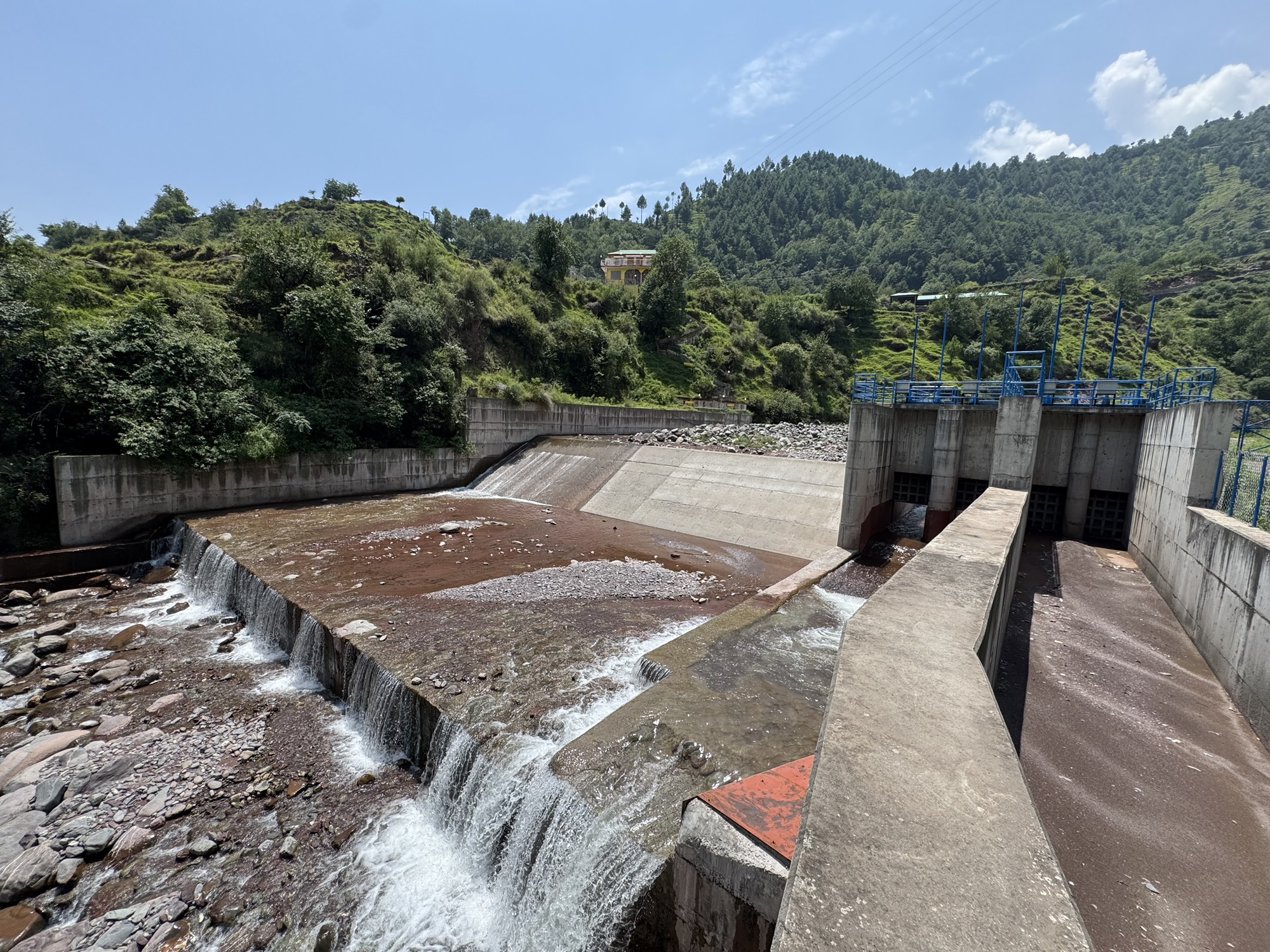
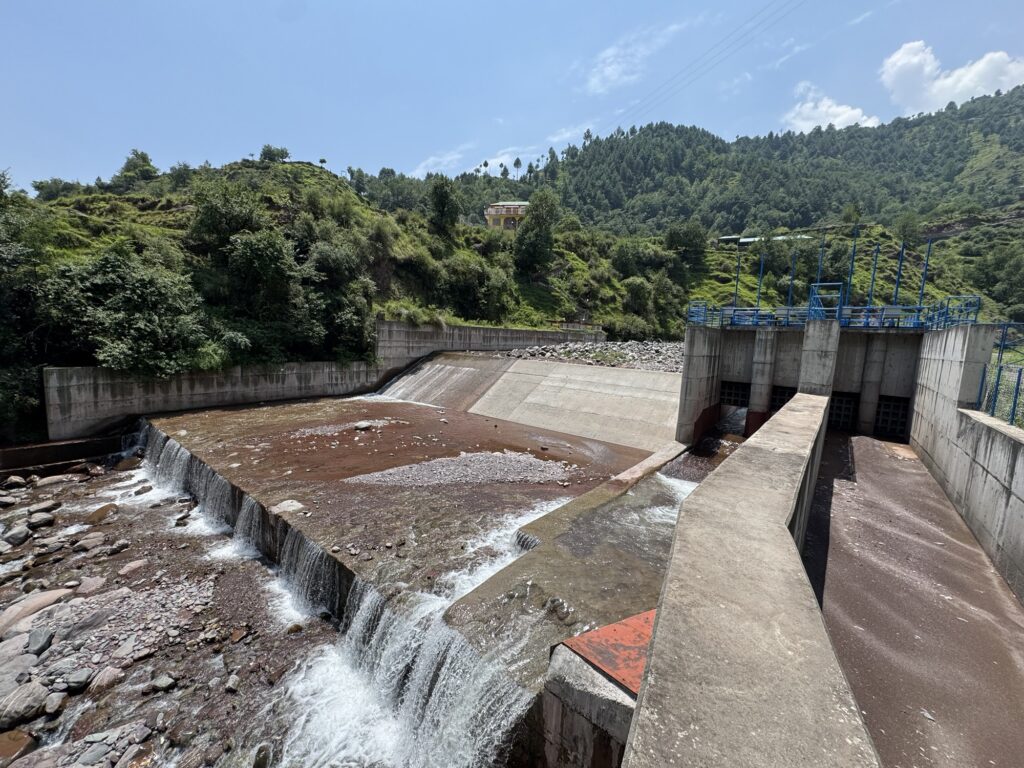
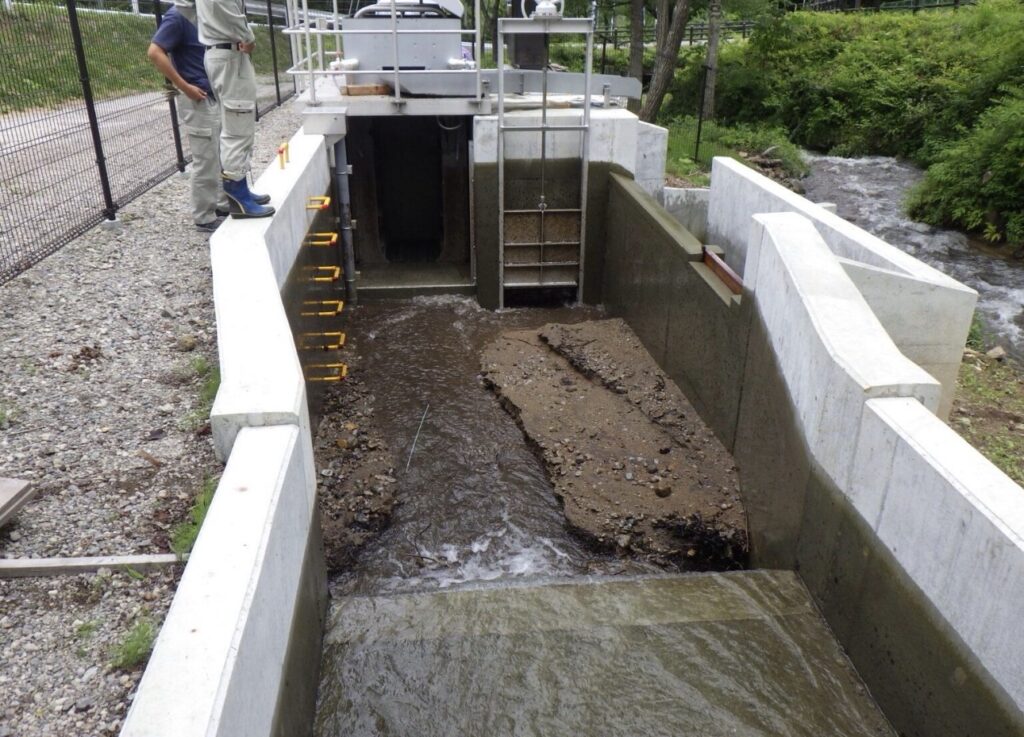
The photograph above captures a mini hydropower diversion structure where sediment deposition has accumulated upstream of the intake and spillway. While these facilities are designed to generate clean, renewable electricity using flowing water, they require regular sediment management to maintain efficiency, protect equipment, and ensure uninterrupted power generation.
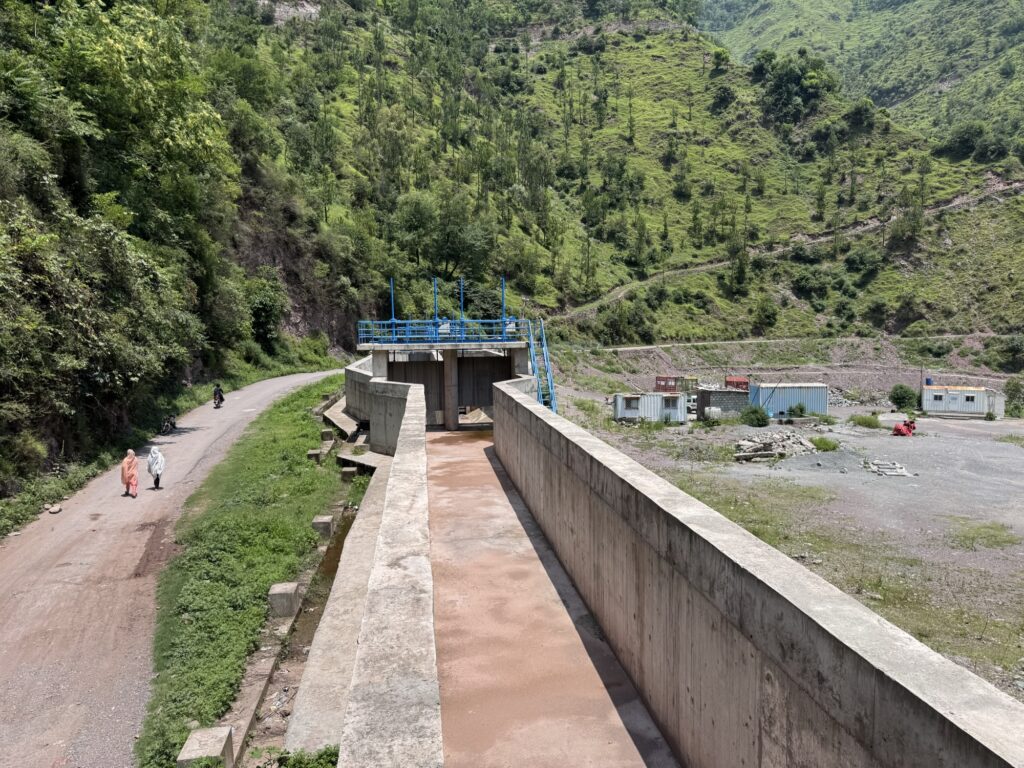
Sediment buildup is one of the most significant operational challenges for run-of-river and mini hydropower projects. Rivers naturally carry sand, gravel, silt, and organic debris, particularly during the monsoon season. As water slows near the diversion weir, these materials settle and gradually reduce the effective storage and flow capacity. Without periodic removal, sediment can block water intakes, reduce turbine efficiency, increase maintenance costs, and shorten the lifespan of critical infrastructure. Effective sediment management is therefore considered an essential part of sustainable hydropower operation.
What the Image Shows
The hydropower structure features:
- A concrete diversion weir that raises the river level.
- An intake structure that directs water toward turbines.
- A spillway allowing excess water to safely return downstream.
- Noticeable sediment deposits consisting of sand, gravel, and fine material accumulated upstream of the intake.
Although water continues to flow over the spillway, the deposited sediment occupies valuable flow area and can eventually interfere with efficient operation if left unmanaged.
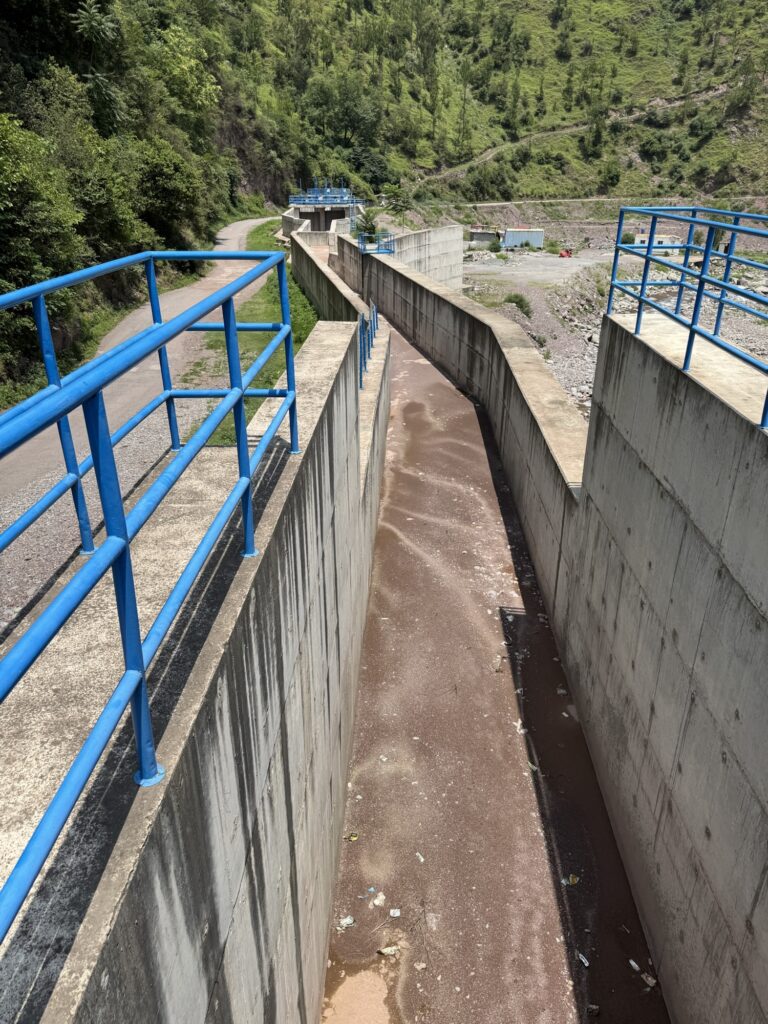
Why Sediment Cleanup Matters
Routine sediment removal provides several important benefits:
- Maintains consistent water flow to turbines.
- Improves renewable electricity generation.
- Prevents abrasion damage to turbine runners.
- Reduces maintenance and repair costs.
- Extends the operational life of hydropower infrastructure.
- Helps maintain safe hydraulic conditions during high river flows.
Proper sediment management also supports more sustainable river operation by balancing energy production with downstream sediment transport where feasible.
Typical Sediment Cleanup Process
Mini hydropower operators generally follow a structured maintenance procedure:
- Inspection
- Survey sediment accumulation.
- Measure deposition depth.
- Identify areas restricting flow.
- Temporary Flow Management
- Reduce intake flow if necessary.
- Maintain safe downstream releases.
- Mechanical Removal
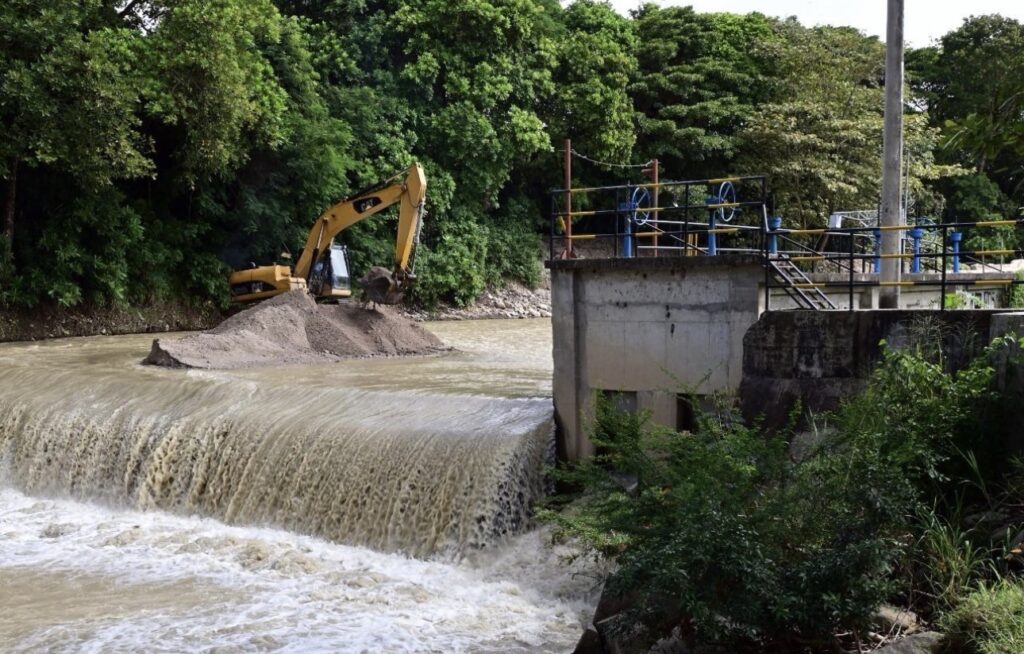
- Excavators remove gravel and coarse material.
- Loaders transport sediment away from operational areas.
- Hydraulic Flushing
- Where designed, gates are opened to flush finer sediments downstream under controlled conditions.
- Final Inspection
- Check intake screens.
- Inspect spillway surfaces.
- Verify unrestricted water flow before returning to full operation.
The exact approach depends on the project’s design, river characteristics, and environmental regulations.
Supporting Sustainable Clean Energy
Mini hydropower offers several environmental advantages:
- Generates renewable electricity with very low greenhouse gas emissions.
- Supplies reliable energy to remote communities.
- Reduces dependence on diesel generators and fossil fuels.
- Operates continuously when adequate river flow is available.
However, sustainable operation depends on responsible maintenance, including effective sediment management that protects both infrastructure and river ecosystems.
Looking Ahead
Climate change is increasing the frequency of intense rainfall and floods in many mountainous regions, transporting larger volumes of sediment into rivers. As a result, sediment monitoring, early warning systems, and modern maintenance practices are becoming increasingly important for hydropower operators. Researchers and industry organizations continue to develop improved sediment management strategies that aim to maximize clean energy production while minimizing environmental impacts.
Final Thoughts
The scene captured at this mini hydropower facility highlights an often-overlooked aspect of renewable energy. Behind every kilowatt of clean electricity lies careful engineering, routine maintenance, and responsible sediment management. Regular cleanup of accumulated sediments ensures that hydropower systems continue to operate efficiently, safely, and sustainably—delivering reliable renewable energy while supporting the long-term health of river infrastructure.
Photo Credit: AdventureNat.online