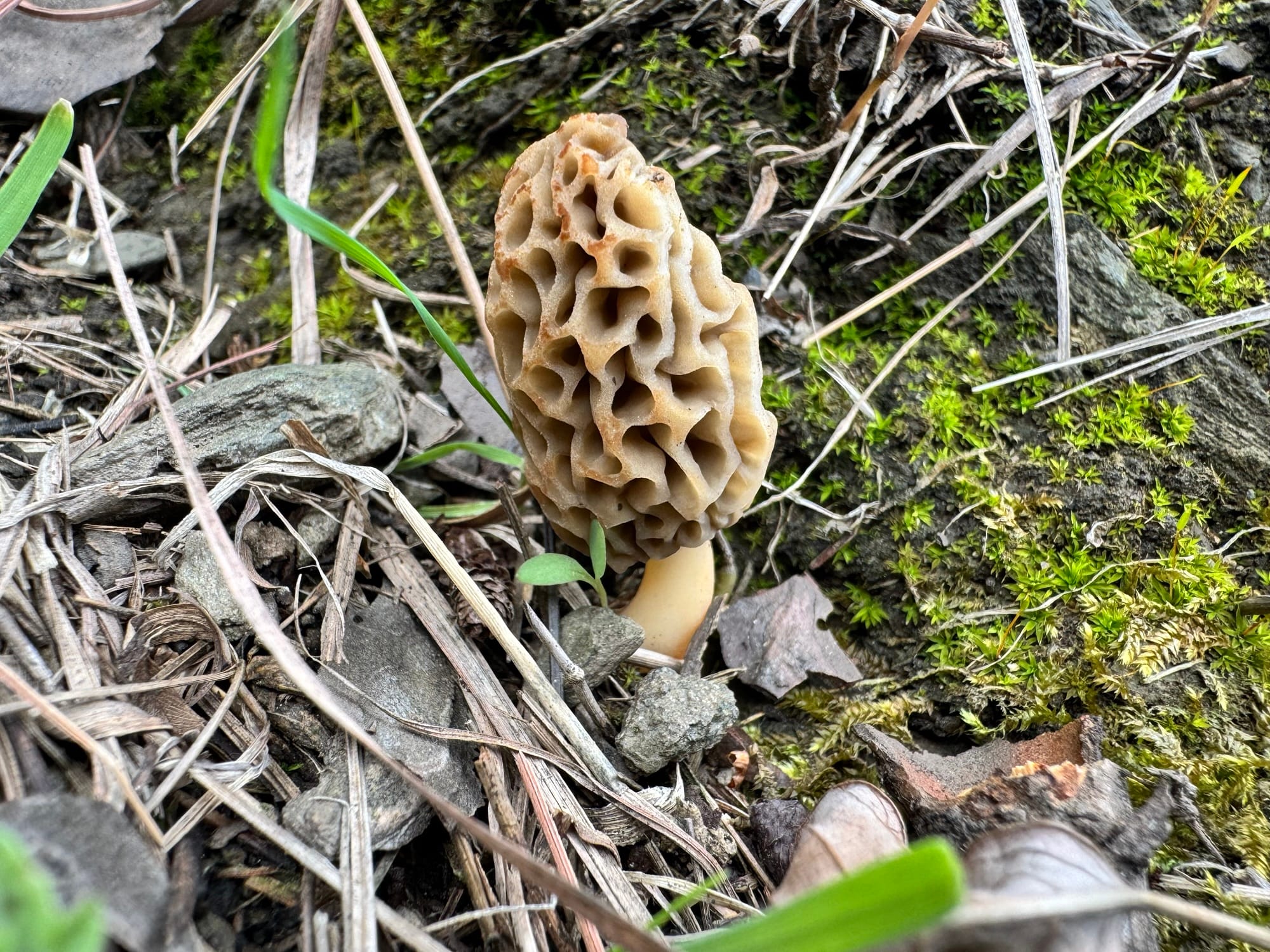
The morel mushroom (Morchella) is one of nature’s most sought-after wild fungi, prized by foragers and gourmet chefs alike. With its unique honeycomb-like structure and rich, earthy flavor, this elusive mushroom is a true delicacy.
What Makes Morel Mushrooms Special?
• Rare & Seasonal: Morels appear for a short time in spring, making them highly valuable.
• Distinctive Appearance: Their sponge-like cap helps distinguish them from other mushrooms.
• Rich Flavor Profile: Known for their nutty, umami taste, they enhance a variety of dishes.
• Foraging Challenge: Morels are difficult to cultivate, making wild harvesting the primary source.
Where Do Morels Grow?
Morels thrive in moist, wooded areas, often found near decaying trees, mossy patches, and leaf litter. They are most commonly spotted in temperate forests across North America, Europe, and Asia.
Cooking & Culinary Uses
Due to their deep, earthy flavor, morels are a favorite in fine dining. They can be sautéed with butter, added to creamy sauces, or used in gourmet dishes like risottos and soups.
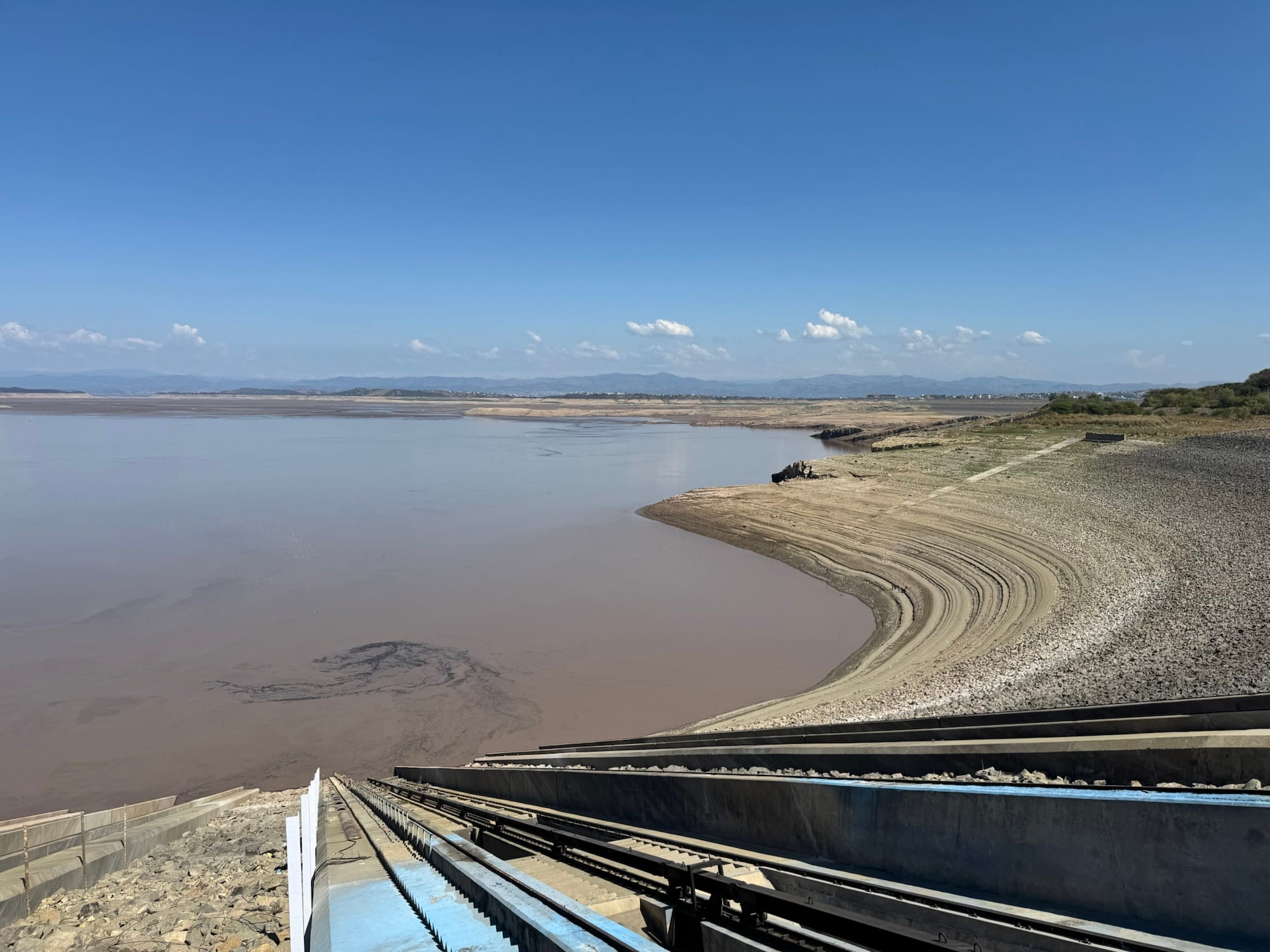
Welcome to our in-depth exploration of how mega dam reservoirs operate when they reach dead level—and the vital process of silt flushing through irrigation valves. This article will highlight the key points of reservoir management, sediment control, and the broader implications for downstream ecosystems.
1. Understanding the Dead Level Stage
When a reservoir hits its dead level, the water volume falls to the lowest operational threshold. At this stage, regular outlets may no longer function effectively for:
• Hydropower generation
• Municipal water supply
• Agricultural irrigation
Instead, dam operators rely on low-level outlets (or irrigation valves) to manage water flow. Reaching this point can be indicative of drought conditions or a planned drawdown for maintenance.
SEO Keywords:
• Mega dam reservoir
• Dead level water
• Irrigation valves
• Drought conditions
2. Why Silt Flushing Matters
a) Sediment Accumulation
Over time, silt and other sediments accumulate in a reservoir, reducing its capacity and threatening water management objectives. This buildup can also damage turbines and reduce hydropower efficiency.
b) Flushing Through Irrigation Valves
By opening bottom outlets or specially designed irrigation valves, engineers can flush out excess sediment. The silt flushing process helps maintain reservoir capacity, protects dam infrastructure, and can improve water quality downstream if managed responsibly.
SEO Keywords:
• Silt flushing
• Sediment control
• Water management
• Bottom outlets
3. Environmental and Community Impacts
a) Downstream Ecosystem Health
Releasing sediment-laden water can temporarily increase turbidity and impact aquatic habitats. However, controlled silt flushing can also deliver nutrients downstream, supporting riverine ecosystems in the long term.
b) Agricultural Considerations
When a dam is at dead level, water availability for irrigation may be limited. Careful planning of silt flushing operations can minimize disruptions to farming communities and ensure sustainable crop irrigation schedules.
SEO Keywords:
• Downstream ecosystems
• Aquatic habitats
• Farming communities
• Crop irrigation
4. Best Practices in Reservoir Management
1. Scheduled Drawdowns
Plan reservoir drawdowns during periods of low water demand to minimize impact on irrigation and drinking water supplies.
2. Regular Monitoring
Use real-time sensors and satellite imagery to track sediment levels and predict the best times for silt flushing.
3. Infrastructure Maintenance
Maintain and upgrade low-level outlets, spillways, and turbines to handle sediment loads effectively.
4. Community Collaboration
Engage with local stakeholders, farmers, and environmental agencies to align silt flushing schedules with agricultural cycles and ecological needs.
SEO Keywords:
• Reservoir management
• Low-level outlets
• Stakeholder engagement
• Environmental agencies
5. Looking Ahead: Sustainability and Efficiency
As climate patterns shift and water resources become more strained, effective reservoir and dam management is increasingly critical. By adopting sustainable practices, leveraging advanced technology, and coordinating with local communities, we can ensure long-term benefits for both humans and ecosystems.
Join the Conversation
Have insights or experiences related to mega dam operations, dead level challenges, or silt flushing? Share your thoughts in the comments or on social media.