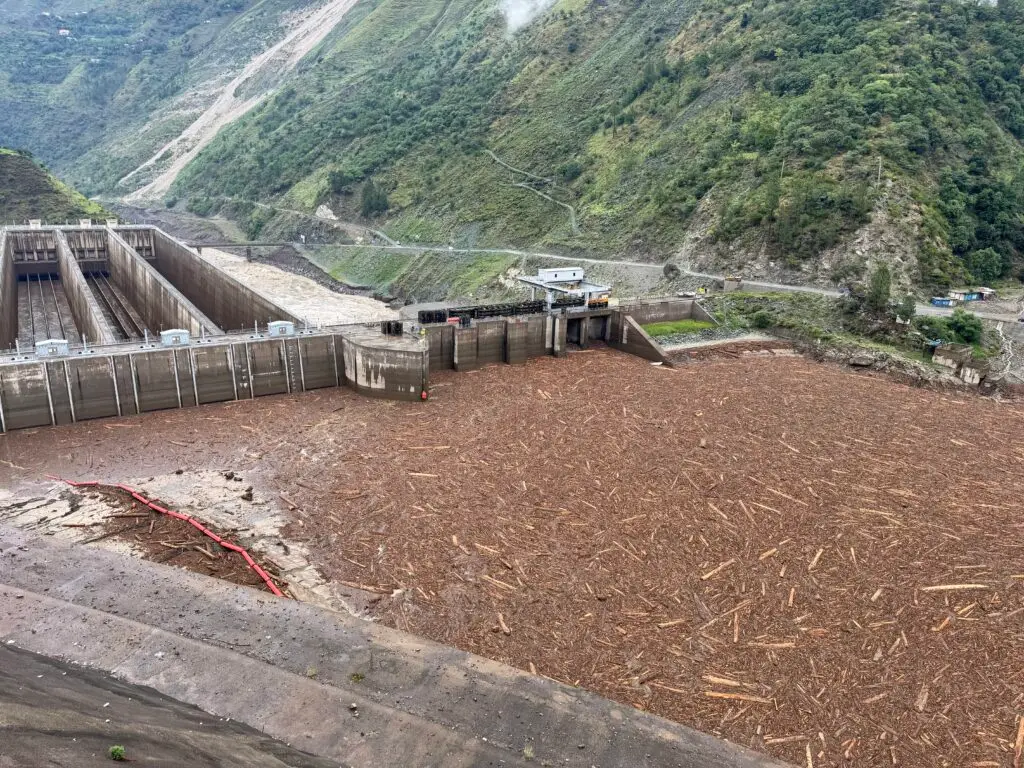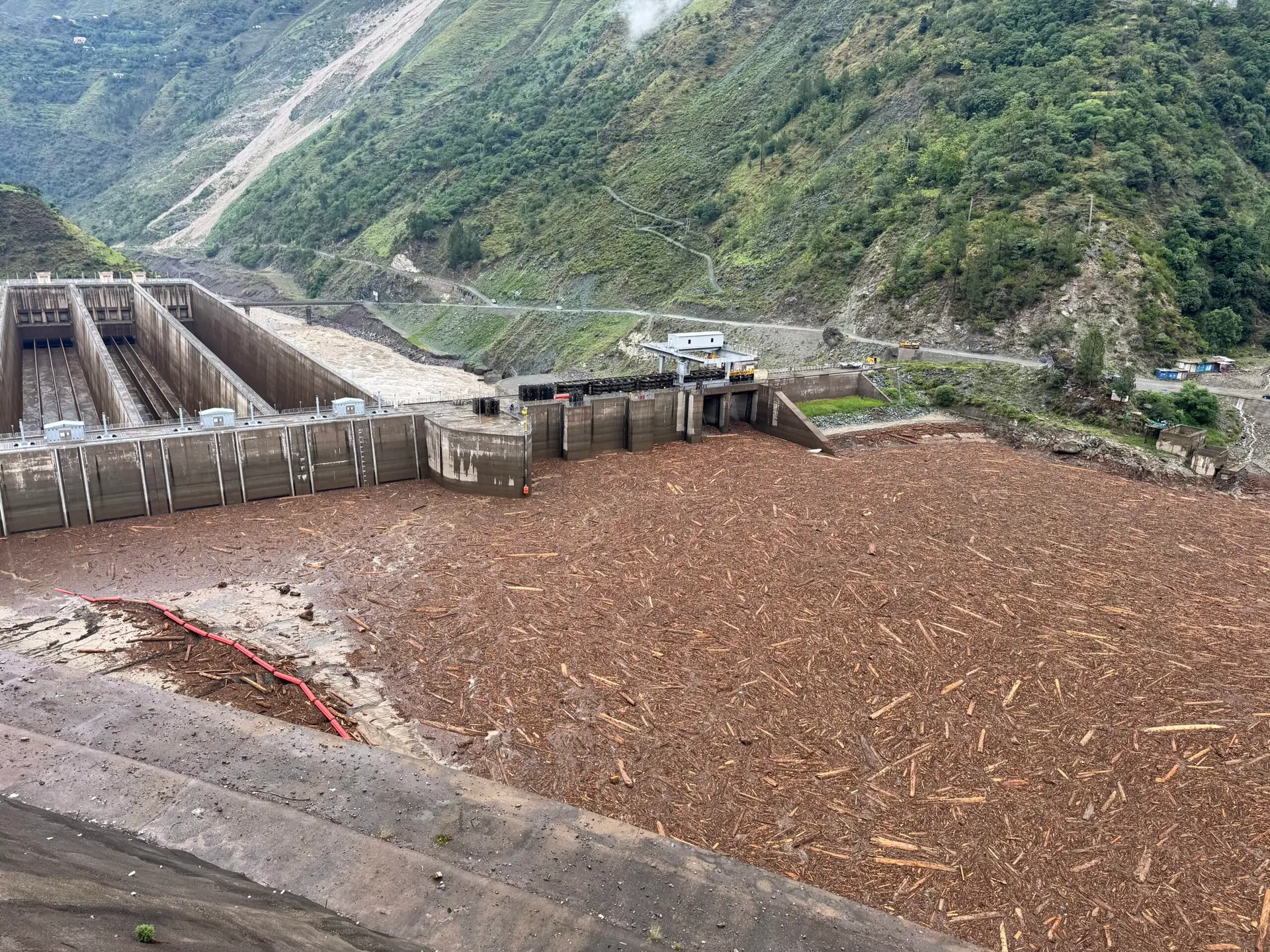
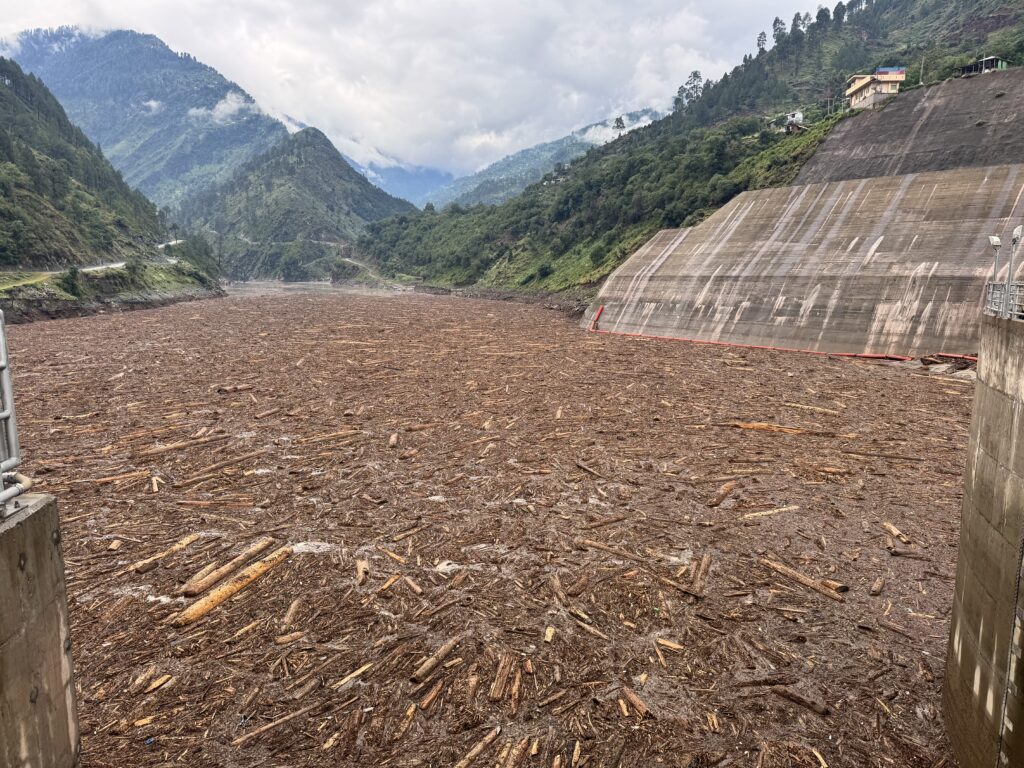
Reservoirs play a vital role in water storage, flood control, irrigation, and hydropower generation. However, one of the most persistent operational challenges is the accumulation of floating debris such as logs, branches, plastic waste, vegetation, and river-borne materials.
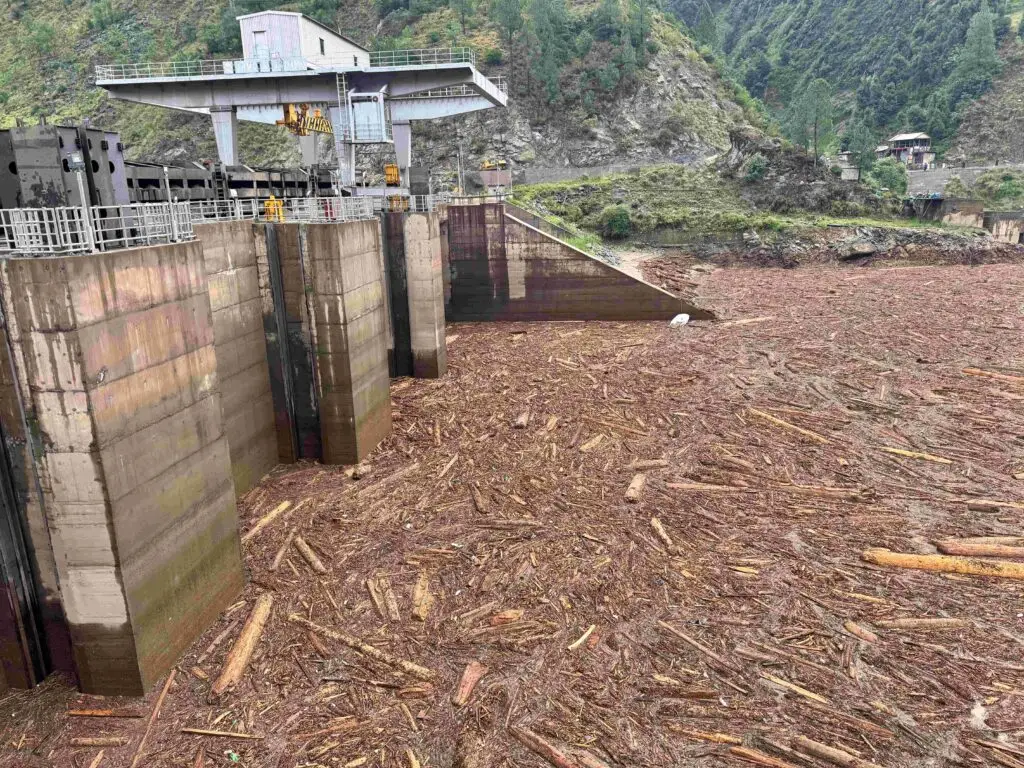
These materials travel with inflowing rivers and accumulate near dam structures, spillways, and intake zones, creating serious technical and environmental concerns.
Major Causes of Floating Debris in Reservoirs
Floating debris generally originates from upstream catchment areas. Key sources include:
- Deforestation and natural erosion along riverbanks
- Flood events carrying large volumes of vegetation and wood
- Urban waste discharge into tributaries
- Landslides and bank collapse during heavy rainfall
- Seasonal river flow variations transporting organic matter
During high flow conditions, debris load increases significantly, often leading to sudden accumulation near dam structures.
Impacts on Dam and Hydropower Operations
1. Blockage of Intakes and Trash Racks
Floating debris can clog intake structures, reducing water flow to turbines and affecting power generation efficiency.
2. Reduced Reservoir Capacity
Continuous accumulation may trap sediment and organic matter, gradually reducing effective storage volume.
3. Risk to Spillway Operation
Debris can interfere with spillway gates, affecting smooth discharge during flood events.
4. Mechanical Damage
Large logs and heavy floating material can damage gates, trash racks, and hydraulic structures.
5. Environmental Concerns
Decomposition of organic debris can degrade water quality and aquatic ecosystems.
Floating Debris Management Techniques
Modern dam engineering uses several strategies to control and remove floating debris:
1. Floating Booms
Barrier systems installed upstream to collect debris before it reaches critical structures.
2. Trash Racks and Screens
Mechanical filters installed at intakes to prevent debris entry into turbines.
3. Spillway Flushing Operations
Controlled gate openings to flush debris downstream during high-flow conditions.
4. Mechanical Removal
Use of cranes, boats, and excavators to physically remove accumulated material.
5. Sediment and Debris Routing
Hydraulic design techniques that guide debris toward safe bypass channels.
Spillway Operation During Debris Events
During heavy inflow, dam operators often perform controlled spillway gate openings. This helps:
- Flush floating wood and vegetation downstream
- Prevent blockage near intake zones
- Maintain safe reservoir levels
- Reduce pressure on structural components
However, such operations must be carefully monitored to avoid downstream environmental impacts.
Importance of Regular Reservoir Cleaning
Routine inspection and debris removal are essential for:
- Long-term dam safety
- Efficient hydropower generation
- Maintaining reservoir storage capacity
- Protecting downstream infrastructure
Integrated monitoring systems and sediment surveys further improve operational decision-making.
Conclusion
Floating debris accumulation in reservoirs is a critical operational issue for dam and hydropower facilities. Effective management requires a combination of structural measures, operational strategies, and regular maintenance. With proper planning, the impact of debris can be significantly reduced, ensuring safe and efficient dam performance.