7 Old Money Style Secrets Elegant Women Over 50 Never Ignore
Introduction:
I have always been fascinated by women who look quietly, unmistakably expensive without a single visible logo. You know the type — she walks into a room and everything about her says ease, confidence, and good judgment. For years I assumed it was simply money. Then I started paying attention, and I realized the truth: old money style is not a bank balance. It is a set of codes, and anyone can learn them.
What makes these codes so powerful for women over 50 is that they were practically designed for us. Old money style rewards restraint over flash, quality over quantity, and timelessness over trend-chasing — the exact instincts most of us have already developed by this stage of life. These are not rules that fight your age; they are rules that honor your experience.
Here are the 7 old money style secrets elegant women over 50 never ignore. None of them require a trust fund — each one works beautifully at any budget, because every secret is about choices, not price tags.
Idea 1: Invest in Fabric, Not Logos

The first old money code is the most important: quality cloth whispers wealth while logos shout for attention. A plain cashmere sweater with no branding whatsoever reads richer than a logo-covered designer piece, because people who know quality recognize it instantly — in the drape, the hand-feel, the way it holds its shape. Logos, on the other hand, date fast and tell the world you paid for the name, not the garment. The practical tip: when shopping, close your eyes and touch the fabric first. If it feels beautiful — soft, substantial, smooth — it will look expensive on you regardless of the label inside. Thrift stores and end-of-season sales are full of gorgeous natural fabrics waiting for someone with educated hands.
Idea 2: The Neutral Wardrobe Foundation

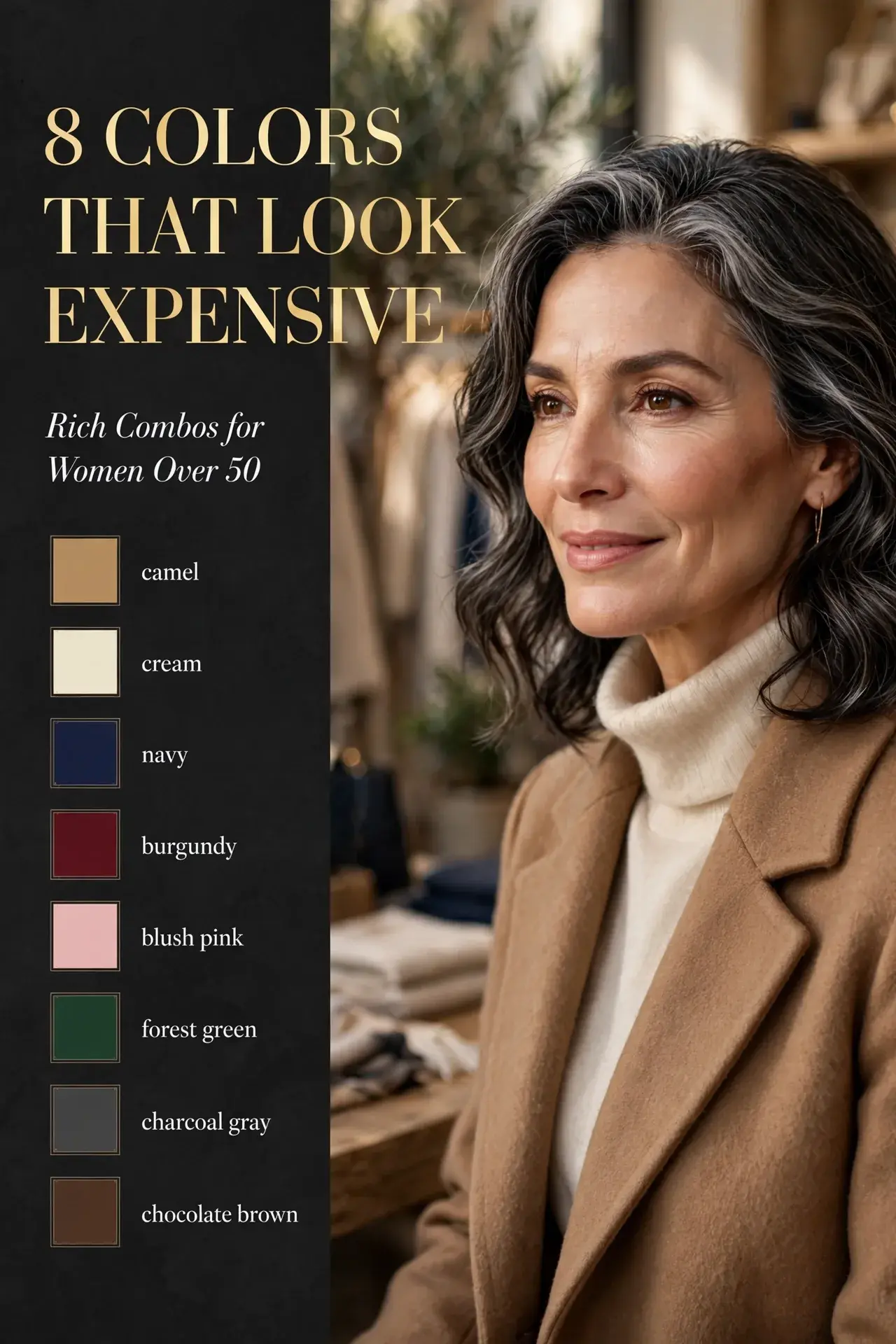
Old money wardrobes are built on a quiet base of beige, navy, gray, and white — and there is a strategic reason. Neutrals mix with everything, which means fewer pieces create more outfits; they never clash, never date, and always look intentional. A navy blazer, white shirt, gray trousers, and beige knit can be recombined endlessly into outfits that look considered every single time. For women over 50, neutrals do double duty: soft neutrals flatter mature skin far better than harsh brights or stark black-and-white contrast. The practical tip: audit your closet and build outward from your neutrals. Before buying any statement piece, ask whether it works with at least three neutral items you already own — if not, it is a costume, not a wardrobe piece.
Idea 3: Timeless Over Trendy, Always

Elegant women with old money taste simply do not chase trends — they wear classic cuts that looked right twenty years ago and will look right twenty years from now. The trench coat, the straight-leg trouser, the simple pump, the cashmere crew-neck: these silhouettes never expire, which means every purchase keeps paying dividends for years. Trend-chasing, by contrast, is the most expensive habit in fashion — you pay full price for pieces that look dated within a season. The practical tip: the next time a trend tempts you, ask one question — would this look elegant in a photograph ten years from now? If the answer is no, admire it on someone else and invest the money in a timeless piece instead.
Idea 4: Understated Jewelry Only

Old money jewelry follows a strict code: small, real, and quiet. A pair of gold studs, a single strand of pearls, a slim watch — pieces that catch the light without catching attention. Flashy, oversized, or obviously costume jewelry breaks the spell instantly, because true luxury never needs to announce itself. On mature women, understated jewelry is especially flattering: delicate pieces near the face draw the eye upward and add glow without competing with your features. The practical tip: choose one metal and stay loyal to it — all gold or all silver reads far more refined than a mixed jumble. And remember the old rule: put everything on, then remove one piece before you leave the house.
Idea 5: Impeccable Grooming as Non-Negotiable

Here is the secret no one wants to hear: the most expensive-looking thing a woman wears is not clothing at all — it is grooming. Clean, well-shaped hair; neat natural nails; good posture; skin that looks cared for. Old money women treat grooming as non-negotiable maintenance, like servicing a fine car, because they know polish is what separates elegant from merely well-dressed. You can wear a simple sweater and trousers, and with impeccable grooming you will outshine someone in designer clothes who skipped the basics. The practical tip: build a small weekly ritual — hair washed and shaped, nails filed and clean, brows tidy. It costs almost nothing and it is the highest-return style investment that exists.
Idea 6: Fit Is Everything

Ask any woman of quiet wealth what matters most and she will tell you: fit. A modestly priced blazer that has been tailored to your shoulders looks a hundred times richer than an expensive one that pulls, gapes, or drowns you. Old money style is never tight and never sloppy — it skims, follows, and moves with the body. For women over 50, fit is the great equalizer: it flatters every figure and makes even simple outfits look deliberate. The practical tip: budget for alterations the way you budget for the clothes themselves. A $40 pair of trousers with a $15 hem looks custom-made; a $200 pair that puddles at the ankle looks careless. Find a good tailor and never skip this step.
Idea 7: Less, But Better

The final code ties everything together: a smaller wardrobe of excellent pieces beats a stuffed closet of mediocre ones. Old money women own less — but everything they own is beautiful, fits perfectly, and works with everything else. This is liberating, not limiting: fewer choices each morning, everything you reach for looks good, and your cost-per-wear drops to almost nothing on pieces you wear for a decade. It is also the most budget-friendly secret of all, because buying one excellent sweater instead of five forgettable ones saves money. The practical tip: for every new piece that enters your closet, let one go. The one-in-one-out rule keeps your wardrobe curated, and curation is the whole essence of old money style.